

getting started
the hardest part is just getting started.

Art making is a weekly newsletter about the practice of making art. I hope to encourage people to start their own practice to give themselves the space to explore, learn, and play…
Often when people find out that I am an artist they’ll tell me about a project they have in mind, or how they want to make one thing or another, but they don’t ever get around to it. Maybe the reason is about a lack of time—we’re pulled in a lot of different directions these day, but often I think it’s just about getting started.
A dear, former neighbor of mine would often smile when we chatted about all the projects we had on our list saying the hardest part is just getting started. He would laugh, “Once you’ve begun you’re practically half way there!”
I think part of what makes getting started hard is that it forces us to step into the unknown. There’s no telling what is around the bend or what issues we may face as we get rolling. Every project gives us the space to learn more about both our supplies and ourselves.
Rather than let the overwhelm take over, we can familiarize ourselves with the early stages to get comfortable with them. Then, we can know what to expect and how to navigate through and around any speed bumps we encounter.
I’ve used a new rug making project as an illustration of the seven steps I encounter when taking on a new project.
one: planning—everything is a jumbled mess. It’s hard to tell if a project can even be made out of all the ideas, questions, and mental chatter.
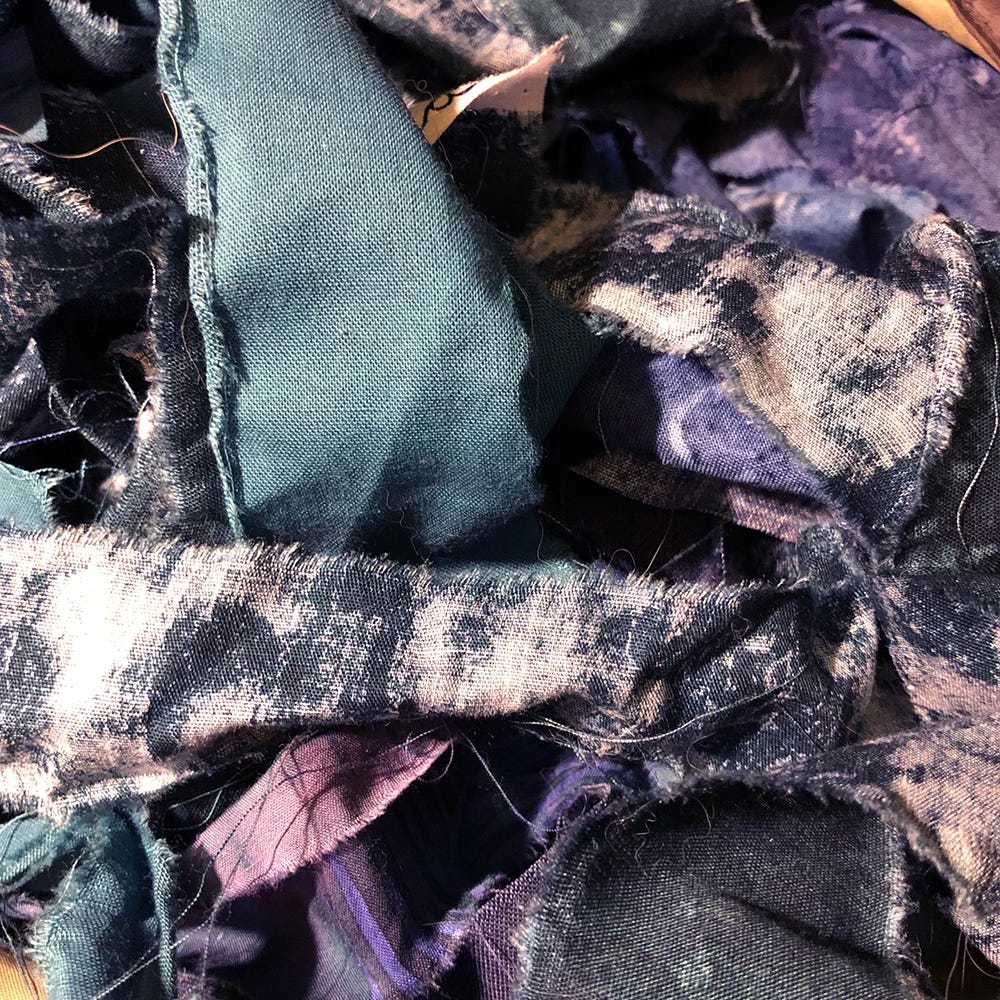
two: sorting—things still look like a mess, but there’s a small amount of organization starting to take place. A thinning out of ideas and hopefully the whisper of confidence is beginning to gain volume.
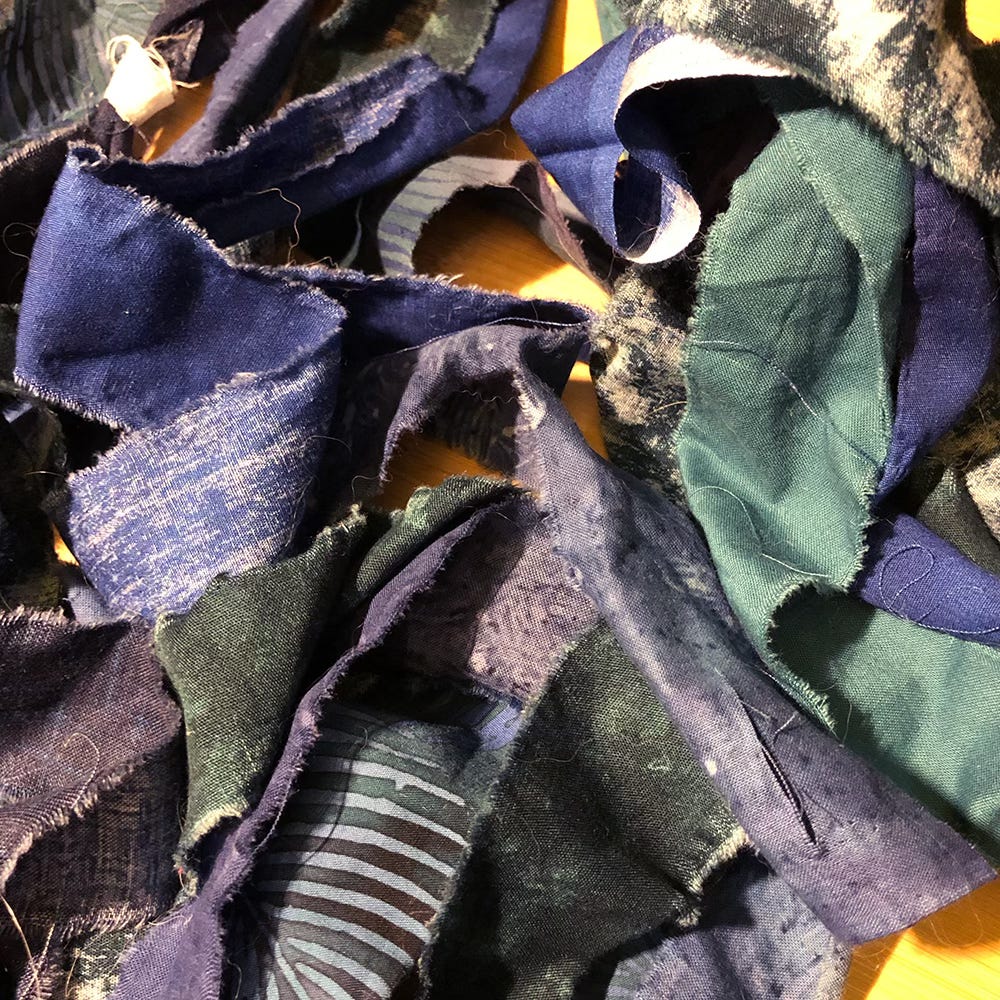
three: organizing—materials are all lined up, a process to begin has been chosen, and now there’s nothing to do but dive in.
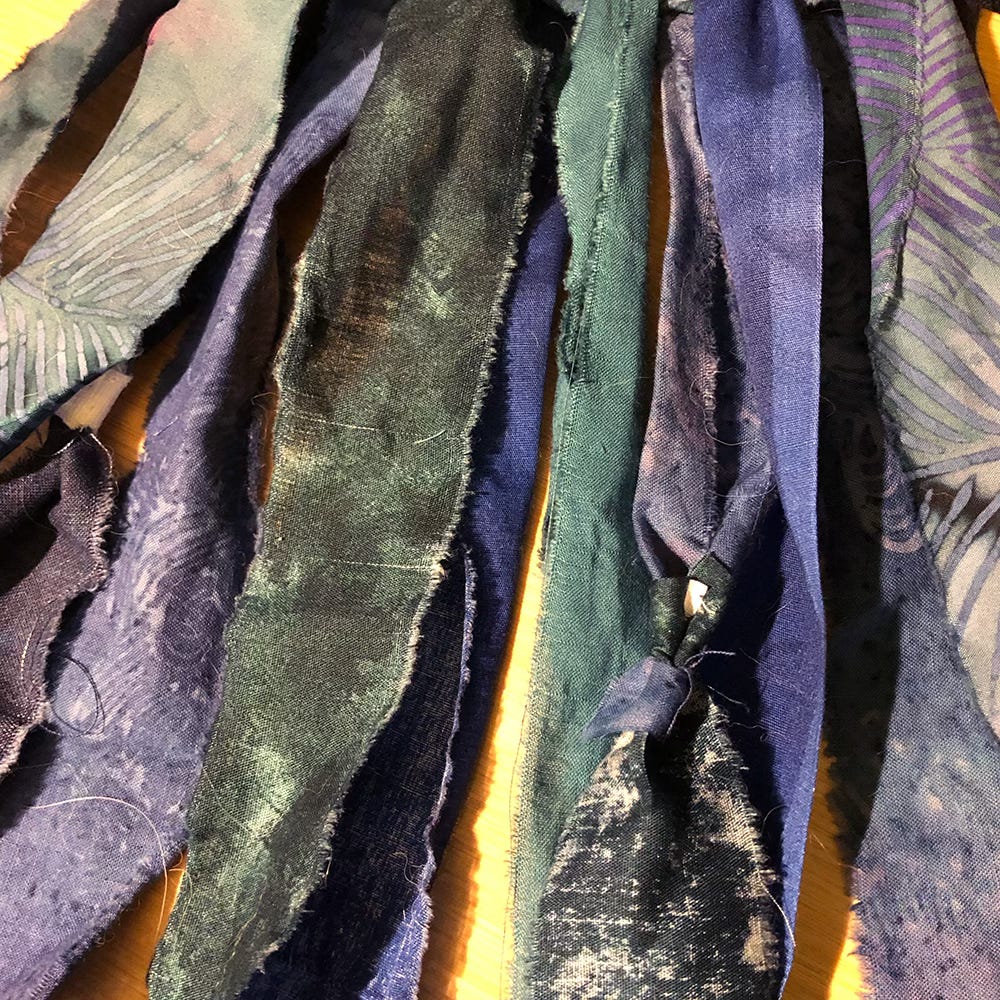
four: initial check-in—this is where you can see how things are looking now that you started. Sometimes, this is where you have to turn back and start over. Once in a while, starting over happens multiple times. This is where patience needs to be fostered because even if you start the work again, you have gained so much learning from steps one through three that you’ll be back in no time.
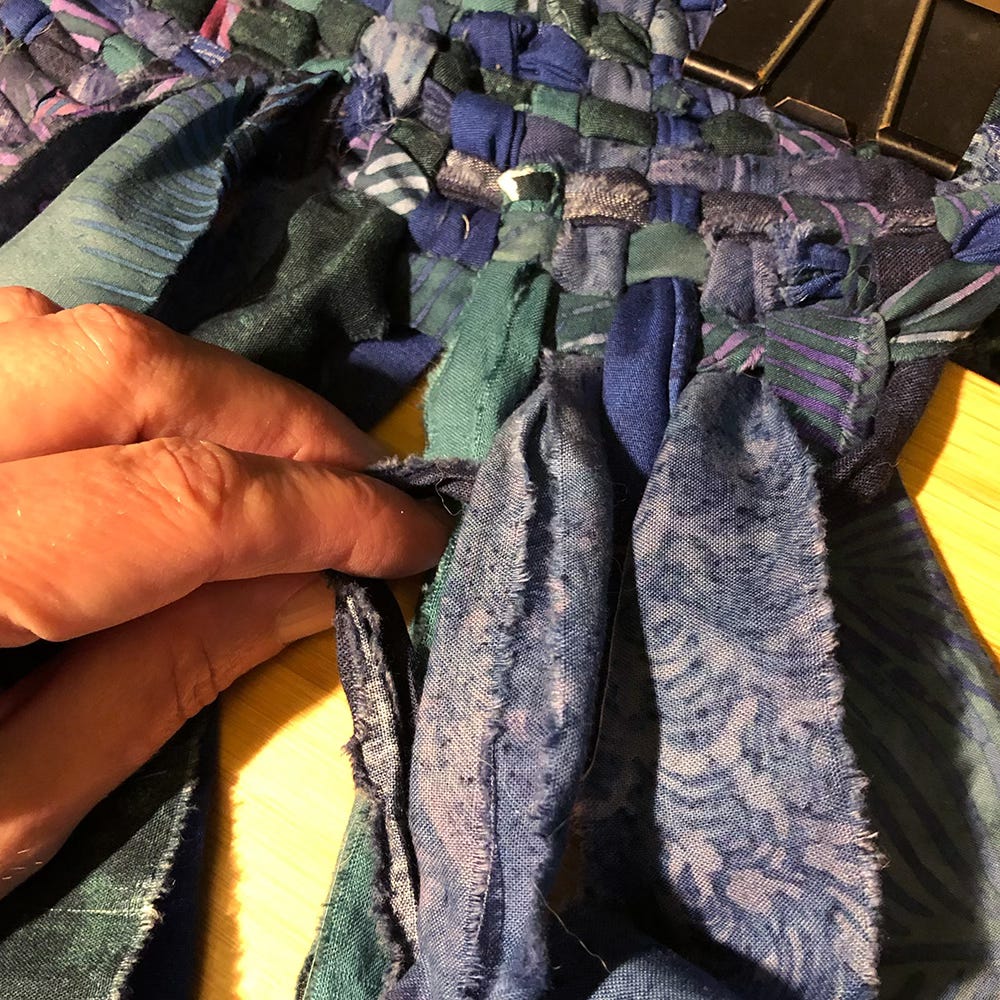
five: progress—everything is on the right track and progress is being made. Still keeping an eye on how things are going just in case.
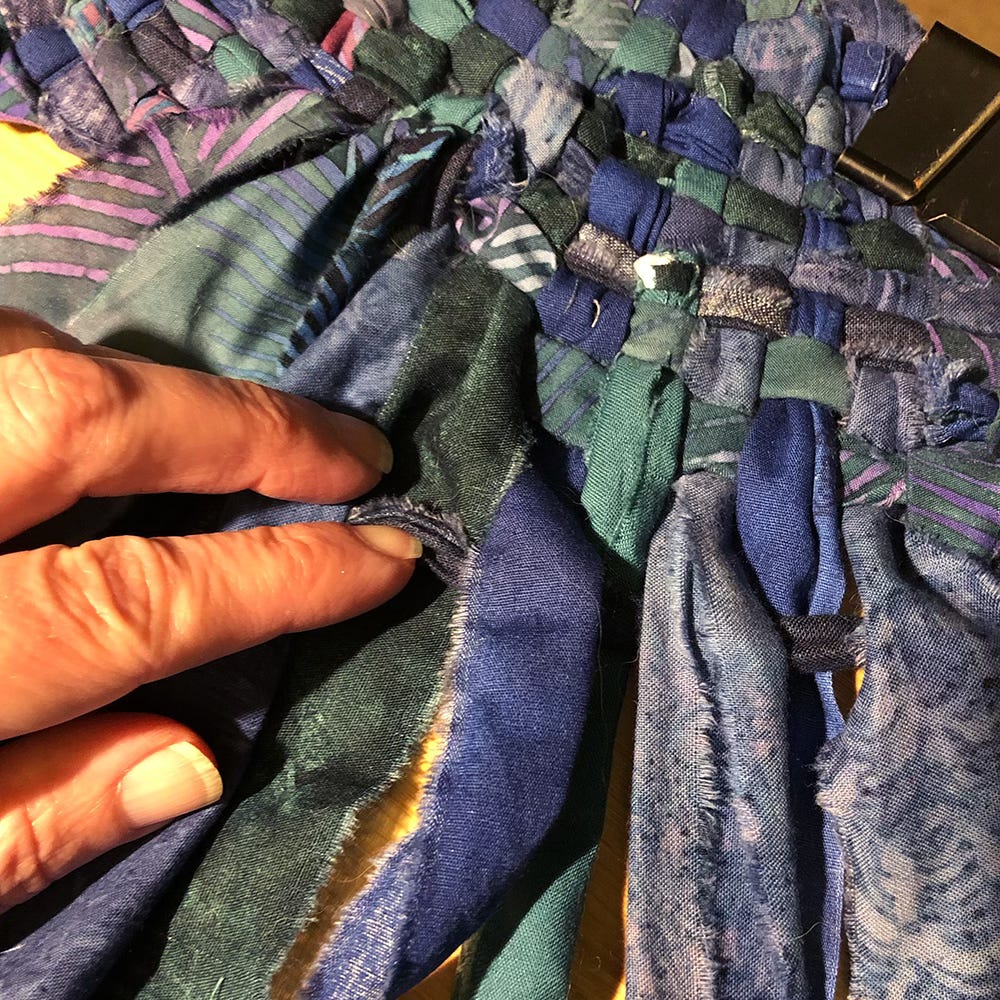
six: settling in—this is the point where the mind can let go a bit because your hands / tools are starting to work with their own rhythm. I like to breathe into my feet, do a quick scan of my body, and adjust my body mechanics. Another check-in involves noticing where and how the feeling of enjoyment shows up while I am working.
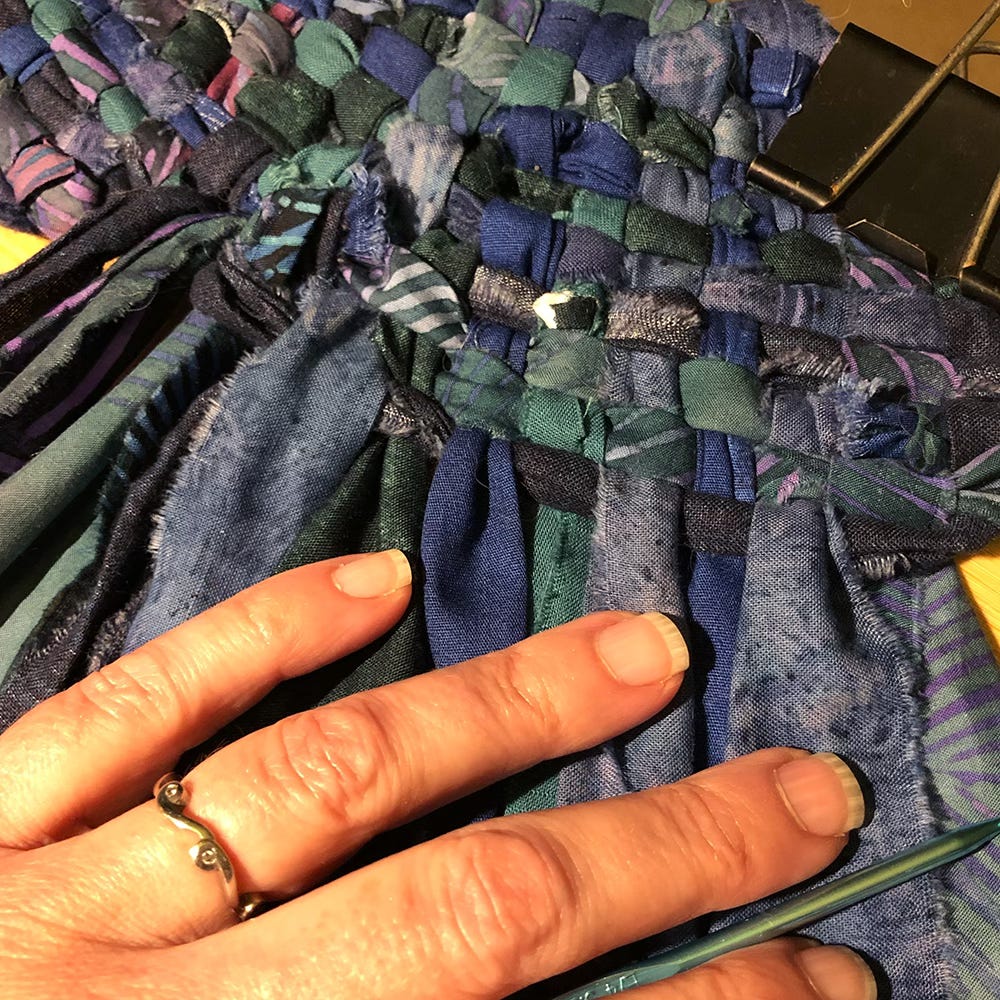
seven: persistence—now it’s all about continuing to show up through the end. Carry it through and wrap it up, even if it is a mess. The learning is what means the most, if you tune in to your body, you’ll know how to proceed. Laugh at the joy of finishing something made by you, notice how it feels.
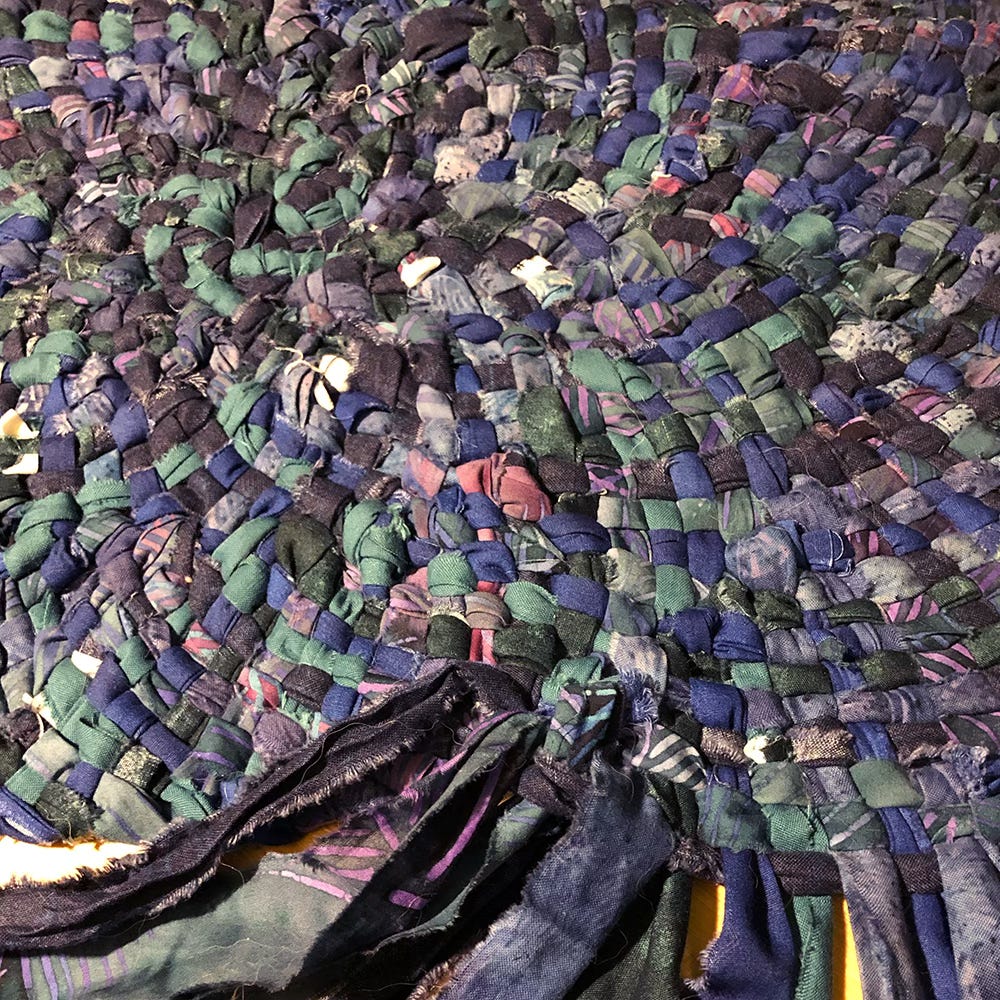
I’m learning to smile once I finish rather than let my mind point out the areas I want to improve. Later, I do take time to objectively note the areas to study, review, and practice. But first, it’s time to enjoy having created something beautiful… 💛
art making is a weekly publication. You can support this work with a 💛, a comment, a share, or subscribe. Make your art and share it!